Lisbon is one of the most charming and atmospheric capitals in Europe.
Built on seven hills and overlooking the Tagus River, the Portuguese capital uniquely combines history, architecture, and a relaxed Mediterranean atmosphere.
Colorful buildings, cobblestone streets, historic trams, and beautiful viewpoints create a city that captivates you from the very first moment.
Walking around Lisbon, you will discover impressive monuments, historic neighborhoods, and lively squares. From medieval castles and magnificent monasteries to picturesque alleys, every corner of the city tells a part of Portugal’s rich history.
Transportation in Lisbon
To explore Lisbon, make sure to wear comfortable shoes and be prepared for plenty of walking and quite a few hills!
The city center is easy to explore on foot, allowing you to discover its neighborhoods at your own pace. However, for attractions that are further away, you will definitely need transportation.
Lisbon has a very good public transportation network, but Uber rides are so affordable that, in my opinion, if you are traveling with two or more people, it’s often not worth the effort of using public transport—calling an Uber is usually the easier option.
From the airport to the city center (which is the most expensive ride), an Uber typically costs around €7–9.
Attraction in Lisbon
Praça do Comércio
Praça do Comércio is one of the largest and most impressive squares in Lisbon. It is located right next to the Tagus River and once hosted the city’s royal palace, which was destroyed during the great earthquake of 1755.
Today, it is one of the liveliest areas in Lisbon, filled with cafés, restaurants, and elegant yellow buildings. It is the perfect place to begin your walk through the historic center of the city.
Arco da Rua Augusta
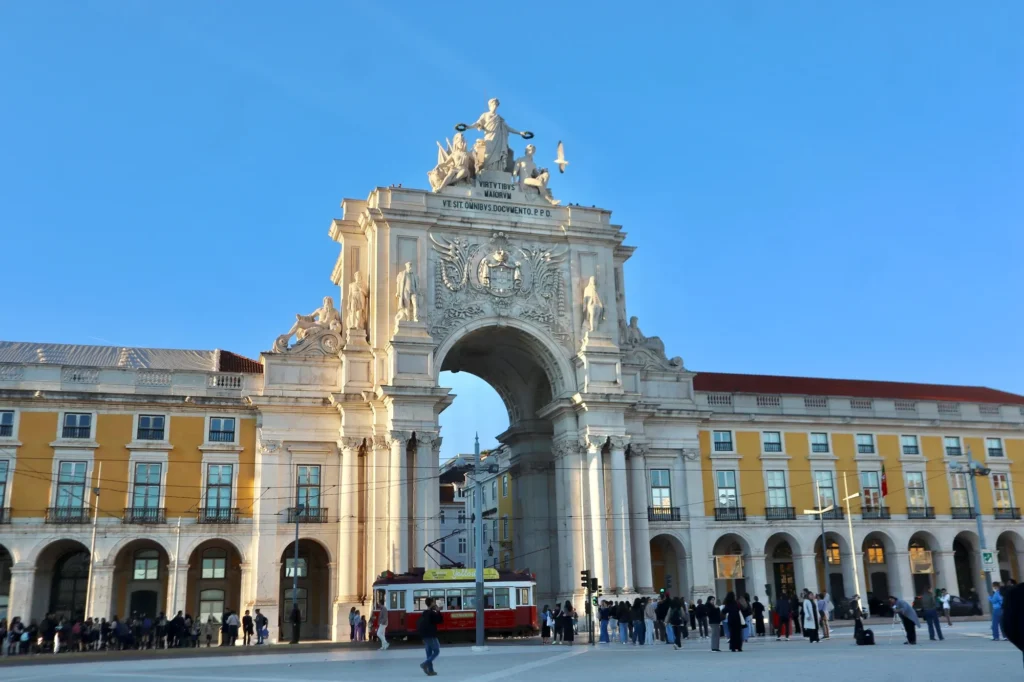
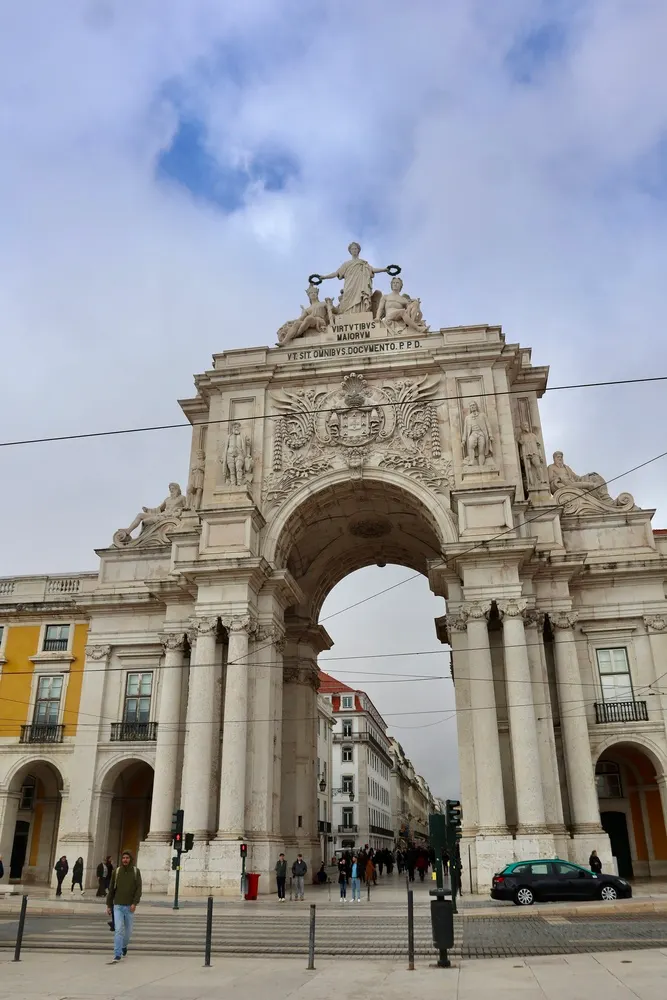
Arco da Rua Augusta is the impressive triumphal arch connecting Praça do Comércio with the city’s main pedestrian street. It was built in the 19th century to celebrate the reconstruction of Lisbon after the devastating earthquake of 1755.
You can climb to the top of the arch to enjoy one of the best panoramic views of the square, the Tagus River, and the city’s rooftops.
Rua Augusta
Rua Augusta is Lisbon’s most famous pedestrian street and one of the liveliest spots in the city. The street connects Praça do Comércio with Rossio Square and is filled with shops, cafés, and restaurants.
During your walk you will also come across street musicians, artists, and small market stalls that give the street a vibrant and authentic atmosphere.
Praça do Rossio
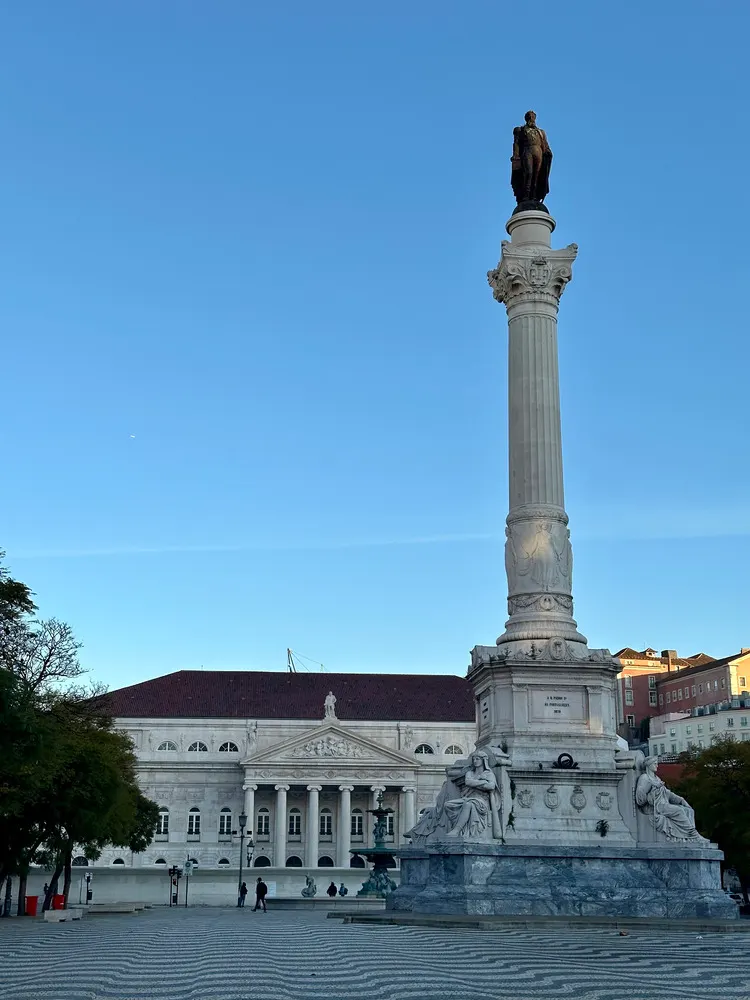
Praça do Rossio is one of Lisbon’s most historic and bustling squares. Its distinctive black-and-white wave-patterned pavement is one of the most recognizable features of the city.
The square is surrounded by cafés, shops, and historic buildings and is the perfect place to experience the lively rhythm of Lisbon.
Praça da Figueira
Praça da Figueira is located in the heart of the city and serves as an important transportation hub.
Today the square hosts markets, cafés, and restaurants, and from here you can enjoy a beautiful view of São Jorge Castle.
Carmo Convent
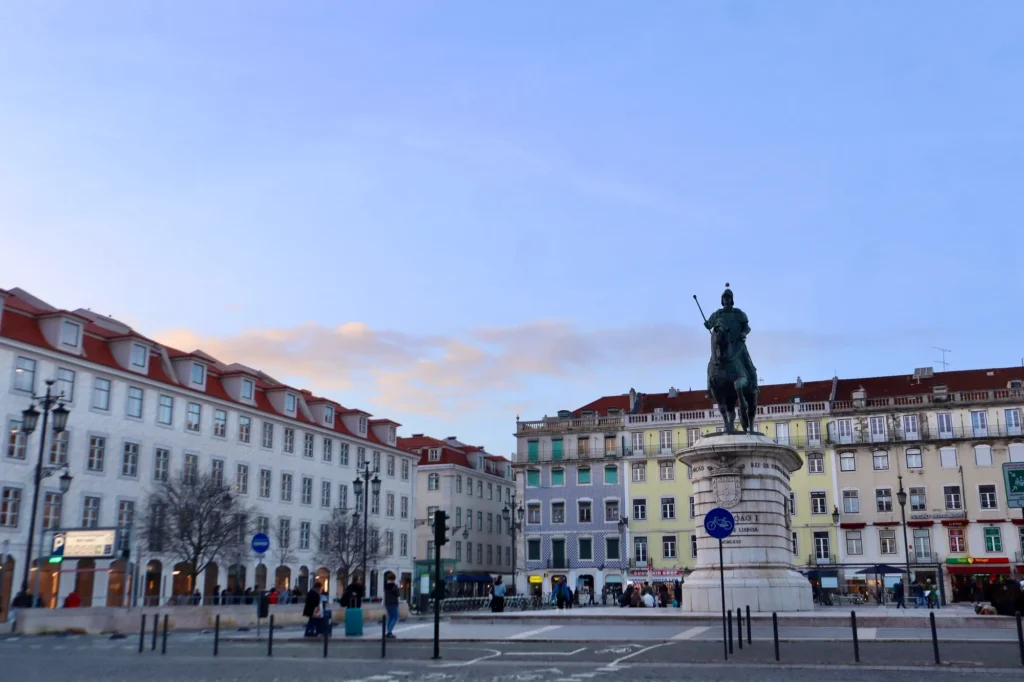
Carmo Convent is one of the most unique historical monuments in Lisbon. It is a 14th-century Gothic church that was destroyed in the great earthquake of 1755 and was never fully rebuilt.
Today its impressive roofless ruins create a unique atmosphere that resembles an open-air museum and make it one of the most photographed places in the city.
Belém Tower
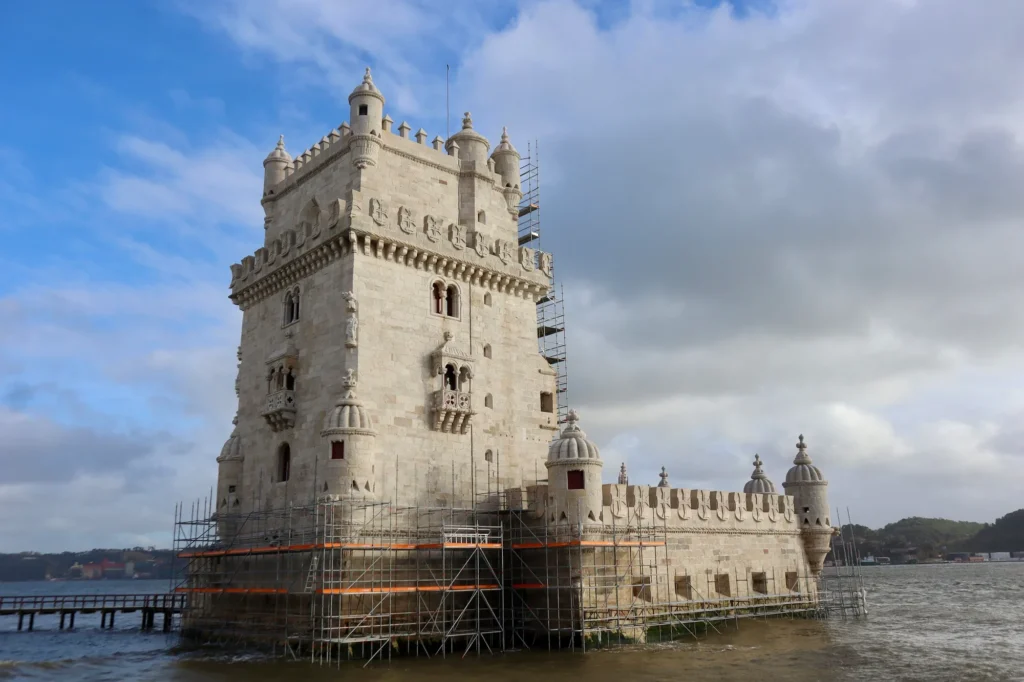
Belém Tower is one of the most iconic symbols of Lisbon. Built in the 16th century on the banks of the Tagus River, it once formed part of the city’s defense system.
Its distinctive Manueline architectural style and its location right by the water make it one of the most impressive landmarks in the Portuguese capital.
Monument to the Discoveries
Monument to the Discoveries is dedicated to the Portuguese explorers who took part in the Age of Discoveries.
The monument is shaped like a ship and features important historical figures from Portugal, including Prince Henry the Navigator. From the top you can enjoy wonderful views of the river and the Belém area.

Jerónimos Monastery
Jerónimos Monastery is one of Portugal’s most important monuments and a UNESCO World Heritage Site.
Built in the 16th century, the monastery houses the tombs of important historical figures, including the famous explorer Vasco da Gama.
Sanctuary of Christ the King
Sanctuary of Christ the King is located on the opposite side of the Tagus River and is one of the most impressive viewpoints in the area.
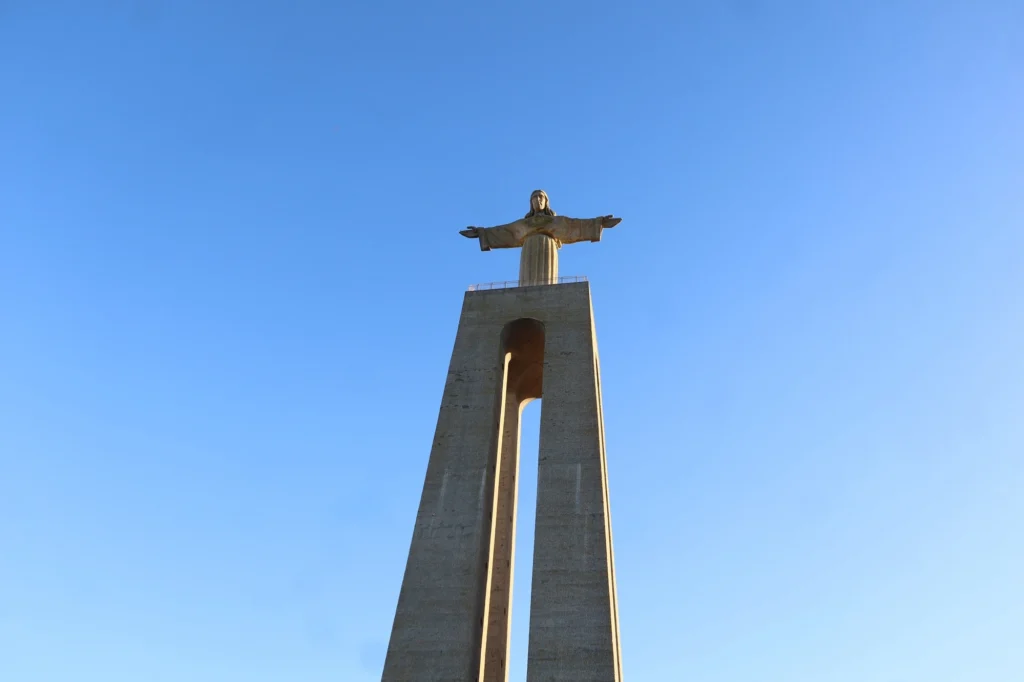
The massive statue of Christ resembles the famous one in Rio de Janeiro, and from its base you can enjoy panoramic views of Lisbon and the 25th of April Bridge.

Church of Saint Anthony of Lisbon
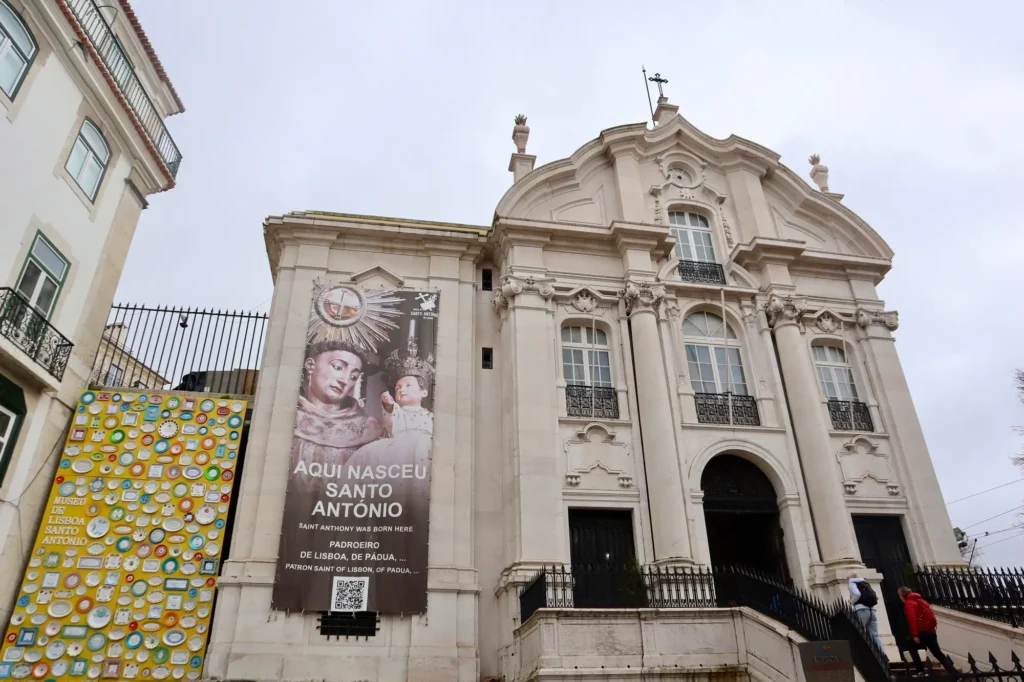
Church of Saint Anthony of Lisbon is dedicated to Saint Anthony, the patron saint of the city. The church is built on the site where, according to tradition, the saint was born.
It is an important religious landmark for the people of Lisbon and attracts many visitors and pilgrims every year.
Lisbon Cathedral
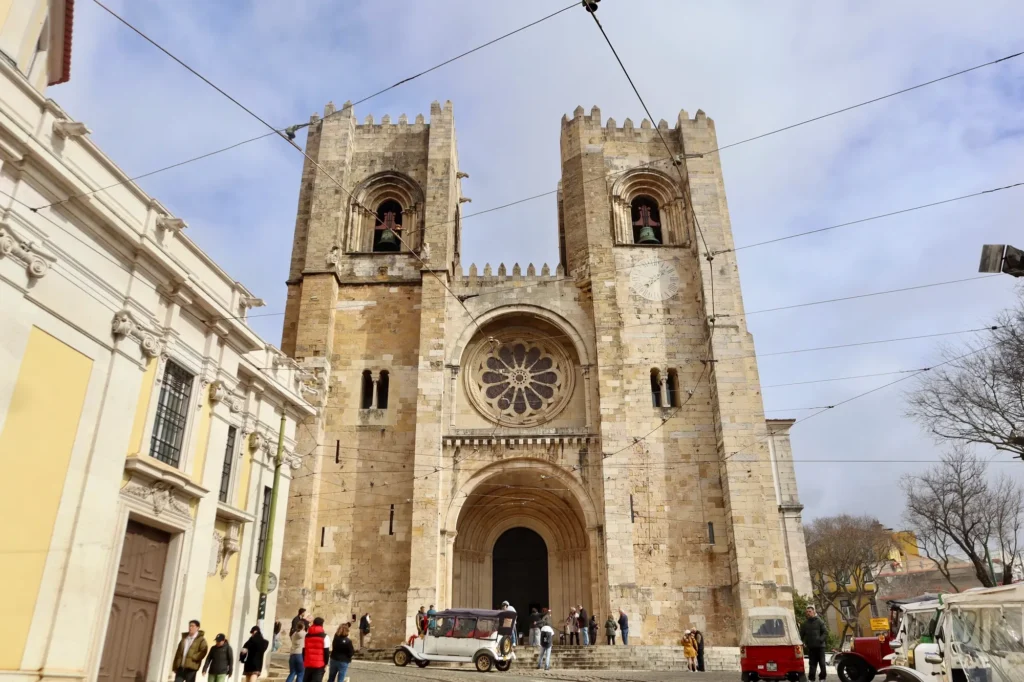
Lisbon Cathedral (also known as Sé de Lisboa) is the oldest church in the city. It was built in the 12th century and has undergone many architectural changes over the centuries.
Its imposing Romanesque façade and historic interior make it one of the most important religious monuments in Lisbon.
São Jorge Castle
São Jorge Castle stands on one of the highest hills in the city and offers spectacular views over Lisbon.
The castle dates back to the Moorish period and today is one of the most popular attractions in the city.
Tram 28
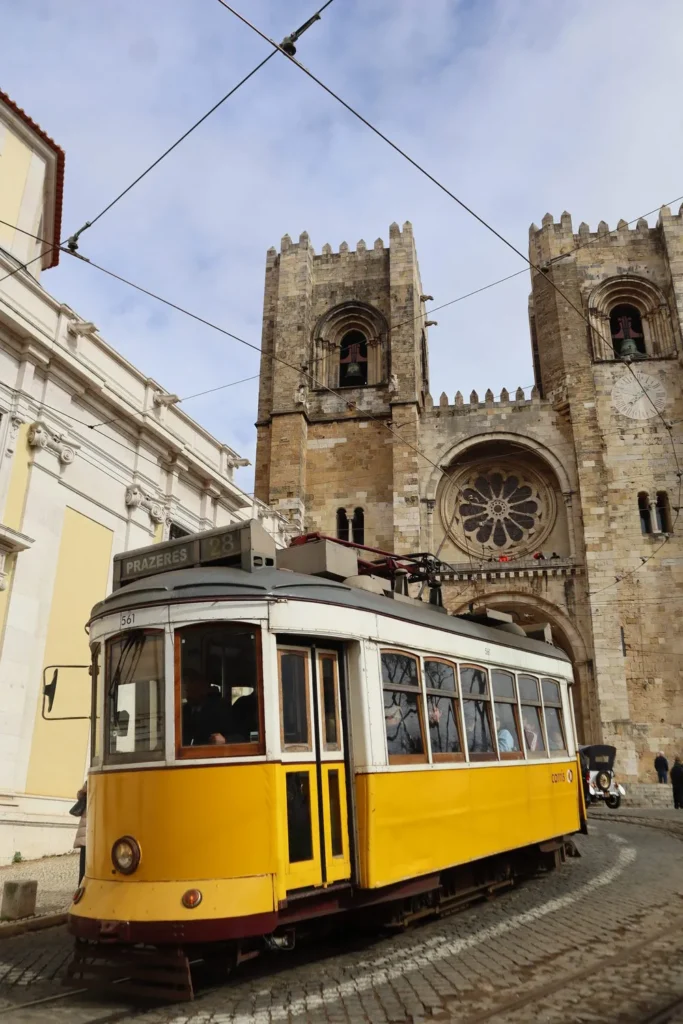
The historic Tram 28 is one of Lisbon’s most iconic means of transportation and an experience you should not miss.
The traditional yellow tram passes through some of the most beautiful and historic neighborhoods of the city, including Alfama, Baixa, and Graça.
Alfama
Alfama is the oldest and perhaps the most authentic neighborhood in Lisbon. Its narrow cobblestone streets, colorful houses, and small traditional restaurants create an atmosphere that feels like stepping back in time.
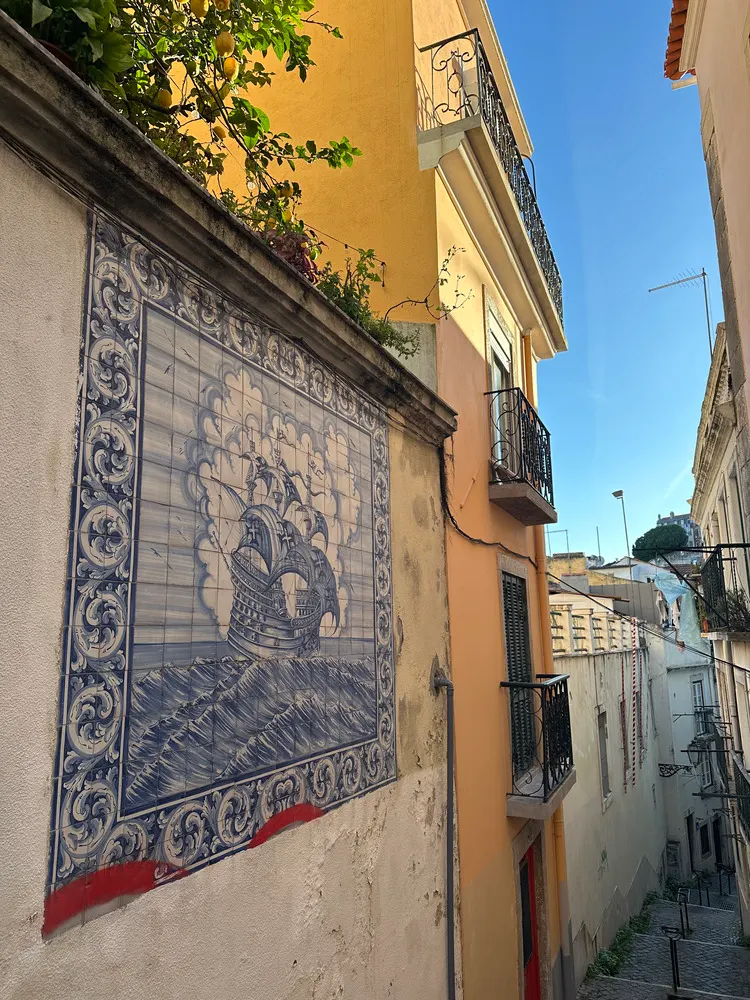
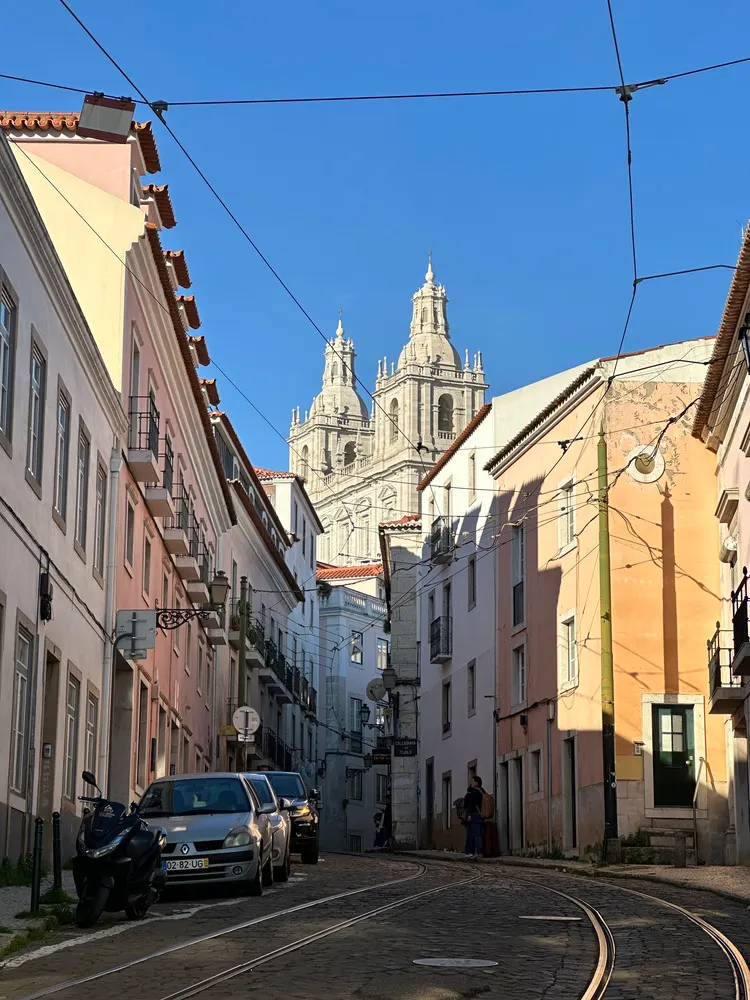
As you wander through Alfama, it’s worth stopping at two of the city’s most beautiful viewpoints: Miradouro das Portas do Sol and Miradouro de Santa Luzia.
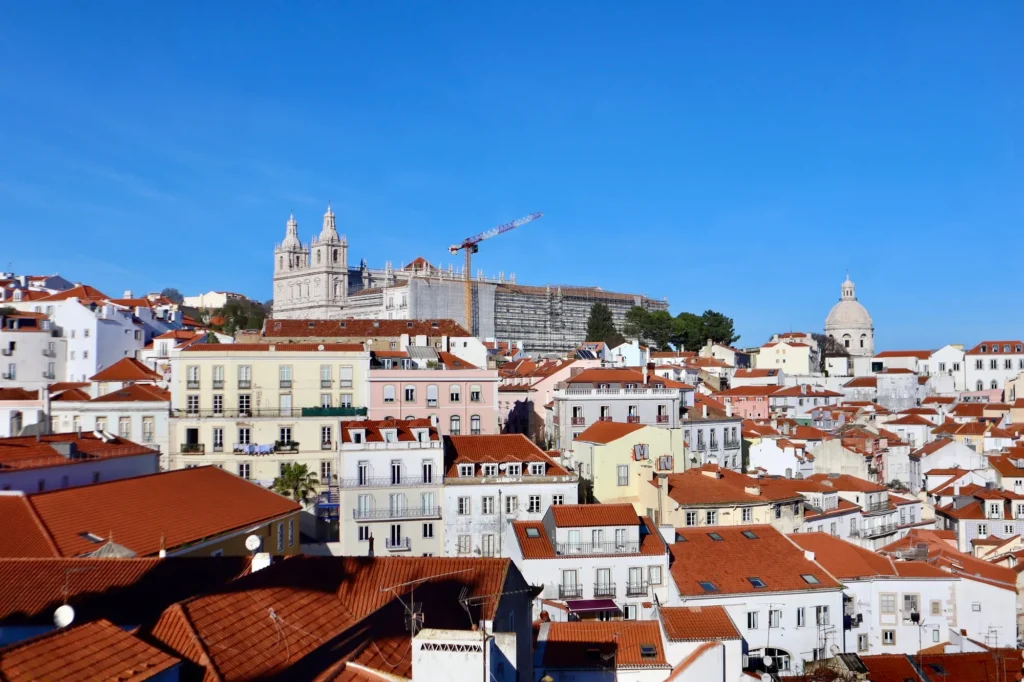
From here you can enjoy panoramic views of the city’s red rooftops and the Tagus River.
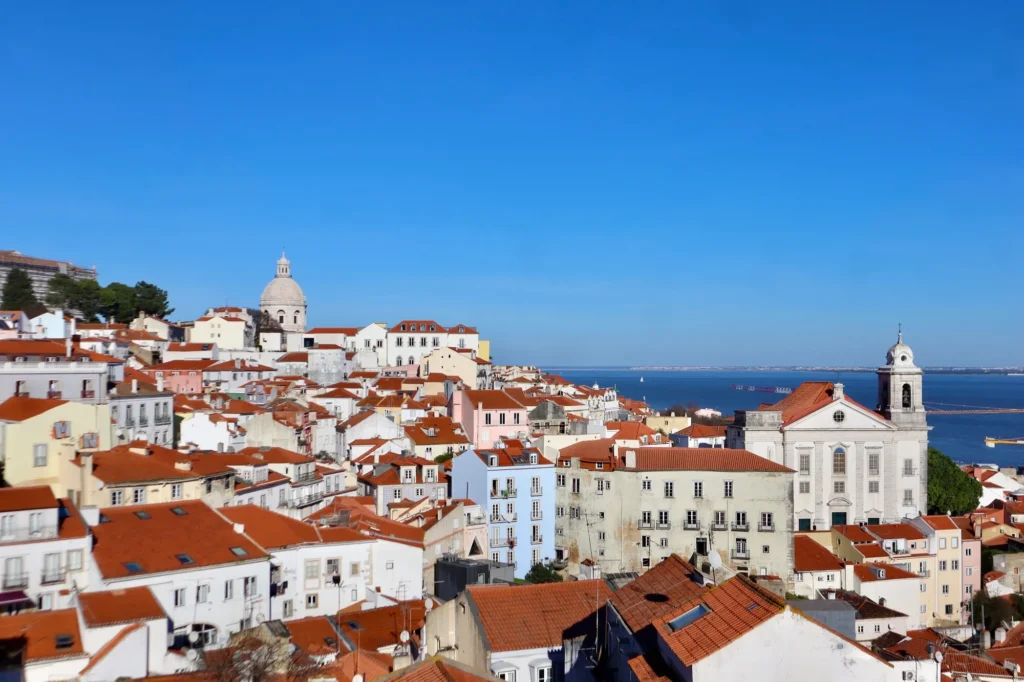
Food in Lisbon
Time Out Market
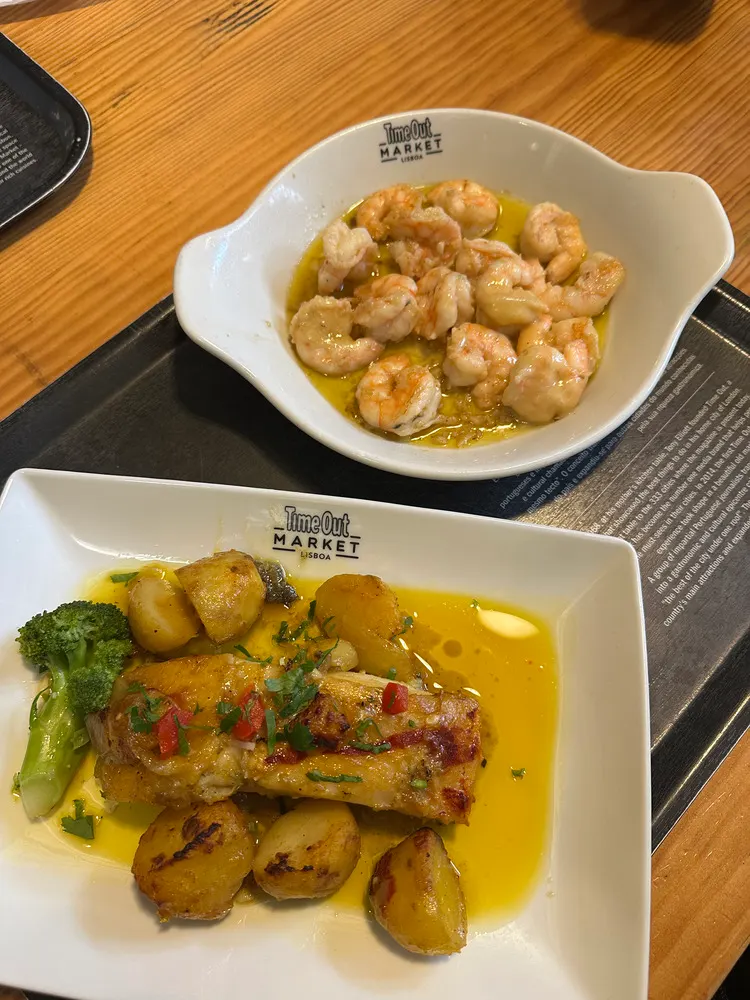
Time Out Market Lisbon is one of the most popular food destinations in the city.
Inside this modern food hall you will find dozens of stalls from famous chefs and restaurants in Lisbon, where you can try everything from traditional Portuguese dishes to international street food.
We tried shrimps with garlic, codfish, and cod croquettes.

Pastel de Nata
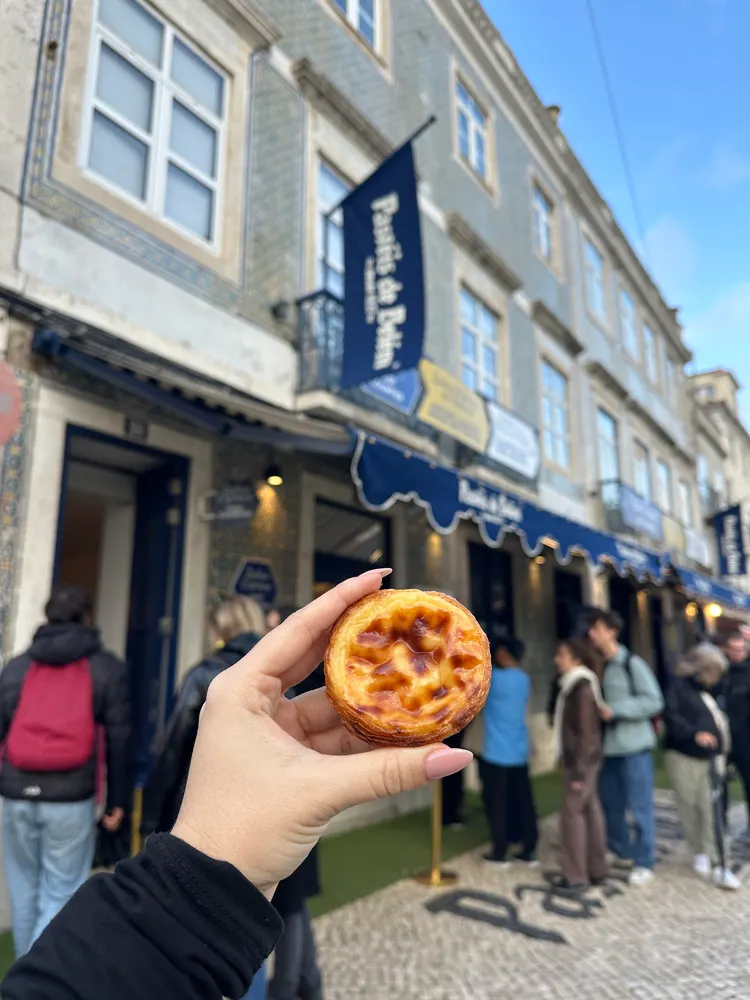
You simply can’t visit Portugal without trying its most famous dessert, the Pastel de Nata.
It is a delicious custard tart with creamy filling flavored with cinnamon, served in a crispy and buttery pastry shell. You can optionally sprinkle it with powdered sugar and cinnamon.
My favorite places I tried, in order, are:
- Pastéis de Belém (honestly the best)
- Manteigaria
- Fábrica da Nata
- Castro
Bifana
One of the most popular and traditional street foods in Lisbon is the Bifana.
It is a simple yet incredibly tasty sandwich made with thin slices of pork cooked in an aromatic sauce with garlic, white wine, and spices.
The meat is served inside a crispy bread roll and is often accompanied by mustard or spicy sauce, depending on your preference.
You can find bifanas in many taverns, small eateries, and markets throughout the city. They are a quick, affordable, and authentic taste of Portuguese cuisine that you should definitely try during your visit to Lisbon.
The best place to try one in Lisbon is As Bifanas do Afonso.
If you prefer a more restaurant-style experience rather than street food, you can visit Art Stay Restaurant & Bar and enjoy your bifana with a glass of wine.

La Fiorentina
If you are looking for something other than Portuguese cuisine, Italian food is always a great option.
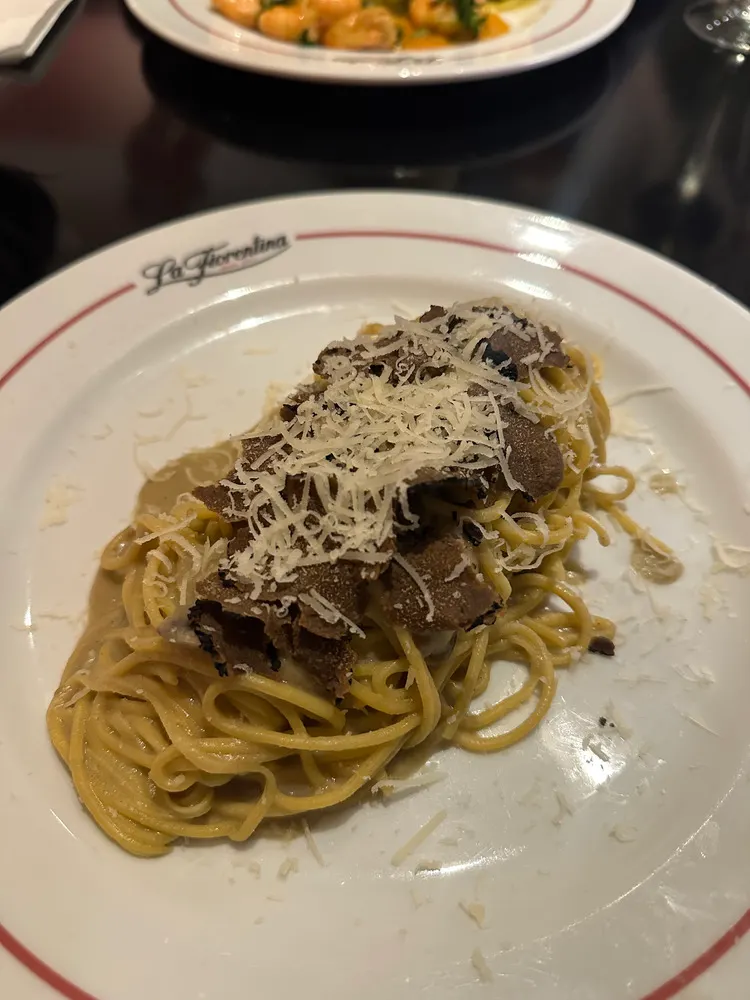
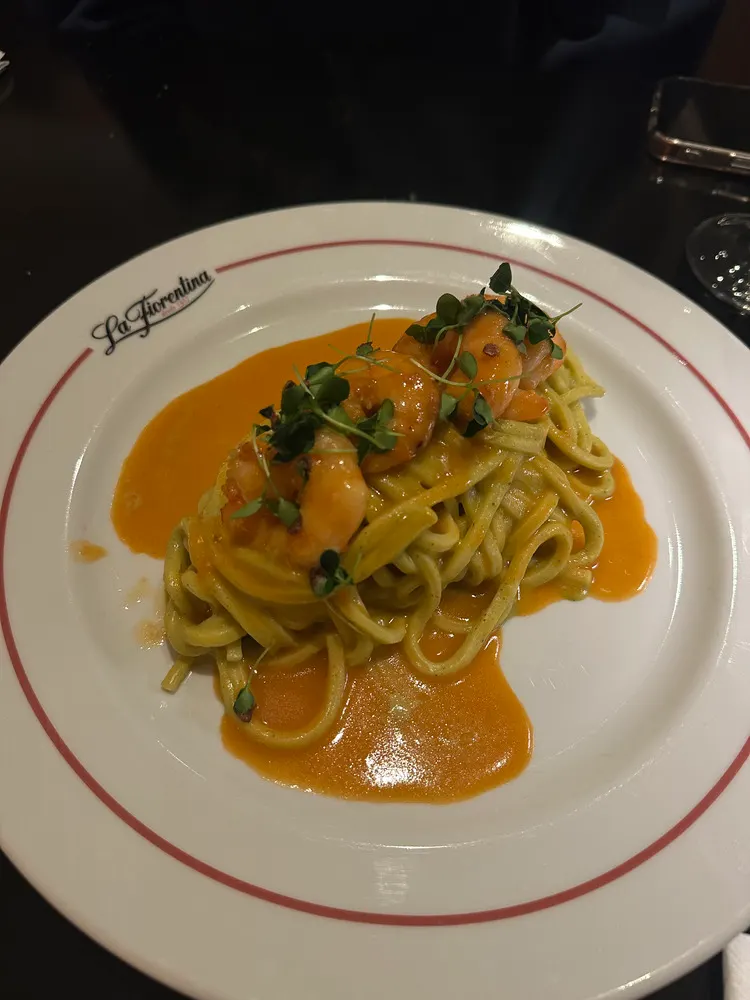
La Fiorentina is a great choice in Lisbon. The staff is extremely friendly and the food is delicious. The portions are quite generous, so make sure you arrive hungry!
We tried tagliolini with fresh black truffle, linguine with shrimp and lemon sauce, and a refreshing salad with burrata, cherry tomatoes, basil, and olive oil. Everything was fantastic.
Casa Portuguesa do Pastel de Bacalhau
One of the most famous foods in all of Portugal—perhaps the most famous—is codfish.
In Portugal you will find cod cooked in countless ways. One street food that has become extremely popular is the cod croquette.
Casa Portuguesa do Pastel de Bacalhau is one of the best places to try it. You can enjoy your croquette with a glass of wine, and as a souvenir they even give you a small cup with the date of your visit printed on it.
Personally, I did not like the cod croquette at all, but many people love it. Since opinions differ so much, you should definitely try one yourself and decide!

If you would like to see more from my trip to Lisbon, feel free to visit my Instagram profile.